
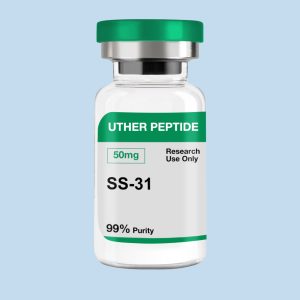
Buy SS 31 Peptide | Elamipretide Peptide for Mitochondrial Research
 SS 31 peptide, also known as Elamipretide, is a synthetic tetrapeptide (D-Arg-2′,6′-dimethyl-Tyr-Lys-Phe-NH₂) specifically designed to target and protect mitochondria. It is widely studied in mitochondrial medicine, cellular aging, and metabolic research for its ability to penetrate cell membranes, localize to the inner mitochondrial membrane, reduce oxidative stress, and improve mitochondrial bioenergetics. SS-31 is a leading compound in investigations of mitochondrial dysfunction, oxidative damage, and age-related degenerative conditions.
Sequence: D-Arg-2′,6′-dimethyl-Tyr-Lys-Phe-NH₂
Molecular Formula: C₃₂H₄₉N₉O₅
Molecular Weight: 639.8 g/mol
Purity: ≥99% (lyophilized, research-grade)
What Is SS-31 Peptide?
SS-31 peptide, scientifically designated as elamipretide and also referred to as Bendavia and MTP-131, is a synthetic tetrapeptide belonging to the Szeto-Schiller family of mitochondria targeting compounds. Its amino acid sequence is D-Arg-Dmt-Lys-Phe-NH2, and unlike many peptides that work on surface receptors, SS-31 was specifically engineered to target the mitochondria, the energy-producing organelles inside cells. What sets SS-31 apart from conventional peptides is its exceptional affinity for cardiolipin, a phospholipid found almost exclusively on the inner mitochondrial membrane. By binding to cardiolipin, SS-31 stabilizes electron transport chain function, reduces reactive oxygen species production and improves ATP synthesis in aging or damaged cells.
Because every cell in the body depends on mitochondria for energy, SS-31 peptide research spans a remarkably wide range of tissues and conditions. Tissues most dependent on mitochondrial energy, including the heart, brain, skeletal muscle, liver and kidney, show the most pronounced responses to mitochondrial support. This broad cellular relevance has made SS-31 one of the most studied peptides in modern longevity and regenerative science.
SS-31 Peptide Benefits
Research into SS-31 peptide benefits continues to expand across multiple domains of cellular and systemic health.
- Cellular Energy and Fatigue Reduction: The most commonly reported outcome of SS-31 peptide research is improved energy and reduced fatigue. When mitochondria produce ATP more efficiently, the cells that depend on that ATP have more energy available, manifesting as improved stamina and a general sense of increased vitality.
- Cardiovascular Support: SS-31 has been used in early human trials in patients with Barth syndrome, heart failure and coronary artery disease, where protecting mitochondrial integrity has demonstrated meaningful cardiovascular relevance. Research in aged animal models showed that SS-31 treatment normalized age-related increases in mitochondrial proton leak, reduced reactive oxygen species production by cardiomyocytes and reversed pre-existing cardiac dysfunction.
- Neuroprotection and Cognitive Health: SS-31 may inhibit the opening of the mitochondrial permeability transition pore, a channel implicated in neuronal death, making this a potential mechanism behind the peptide’s cognitive health benefits. In models of Alzheimer’s, Parkinson’s and stroke, SS-31 reduced neuronal loss and improved cognitive function, while also showing promise in reducing brain fog and protecting against neuroinflammation.
- Anti-Aging and Longevity Research: By protecting mitochondrial integrity, SS-31 slows telomere shortening, cellular senescence and DNA damage, which are hallmarks of aging. It also improves skin elasticity, reduces frailty and enhances metabolic flexibility.
- Ocular Health: Mitochondrial dysfunction plays a key role in retinal degeneration. SS-31 has been studied in conditions like age-related macular degeneration and dry eye, with positive results reported in preclinical settings.
SS-31 Peptide Dosage
SS-31 peptide is primarily delivered via subcutaneous injection, allowing the compound to circulate and reach tissues efficiently. Some studies have also explored intravenous administration for clinical applications, particularly in mitochondrial disease and cardiac conditions. Research settings often use daily or every-other-day injections, with dosage ranges in human trials generally falling within the single-digit milligram scale per day.
Research low doses range from 5 to 10 mg subcutaneously once daily. In larger clinical investigations, doses of 4 mg and 40 mg once daily subcutaneously were tested in a phase 2 double-blind randomized controlled trial in heart failure patients.
Since SS-31 is not approved, there are no standardized clinical dosing guidelines outside of investigational studies. All use of SS-31 peptide is strictly intended for laboratory and scientific research purposes. Researchers are advised to review current literature and consult qualified professionals before designing any dosage protocol.
Disclaimer: SS-31 peptide is supplied for research and laboratory use only. It is not intended for human therapeutic use, self-administration or clinical treatment outside of approved investigational frameworks.


Reviews
There are no reviews yet.